The 8 Pillars Formula: A Biblical Herbs Supplement, Chapter and Verse
Every botanical in this supplement, the passage that names it, and the amount in each serving.
The Bible Supplement is a 730 mg biblical herbs supplement: a blend of eight herbs of the Bible, each drawn from a specific passage of Scripture. This page documents each one — the Hebrew or Greek word, the passage that names it, what that passage is describing, and how many milligrams are in a serving. Every word here is documentation: the Scripture, the plant and the Supplement Facts panel.
The Eight Botanicals
Herbs of the Bible: Where These Eight Come From
The eight are not a scattered collection of plants that happen to appear somewhere in the text. They fall into three groups, and every one can be traced to a specific passage.
The Seven Species
Deuteronomy 8:8
A land of wheat and barley, of vines and fig trees and pomegranates, a land of olive trees and honey. Three of the eight — grape, pomegranate and olive — are named in that single verse as the produce of the promised land.
The Oil and the Incense
Exodus 30
One chapter gives the measured recipes for the holy anointing oil and the holy incense. Myrrh and cinnamon are weighed out by shekel in verse 23; frankincense is one of the four spices of the incense in verse 34.
The Table and the Parable
Exodus 12:8, Matthew 13:31
The remaining two come from the Passover meal and from the teaching of Jesus: the bitter herbs eaten with the lamb, and the mustard seed, smallest of seeds, that becomes the largest of the garden plants.
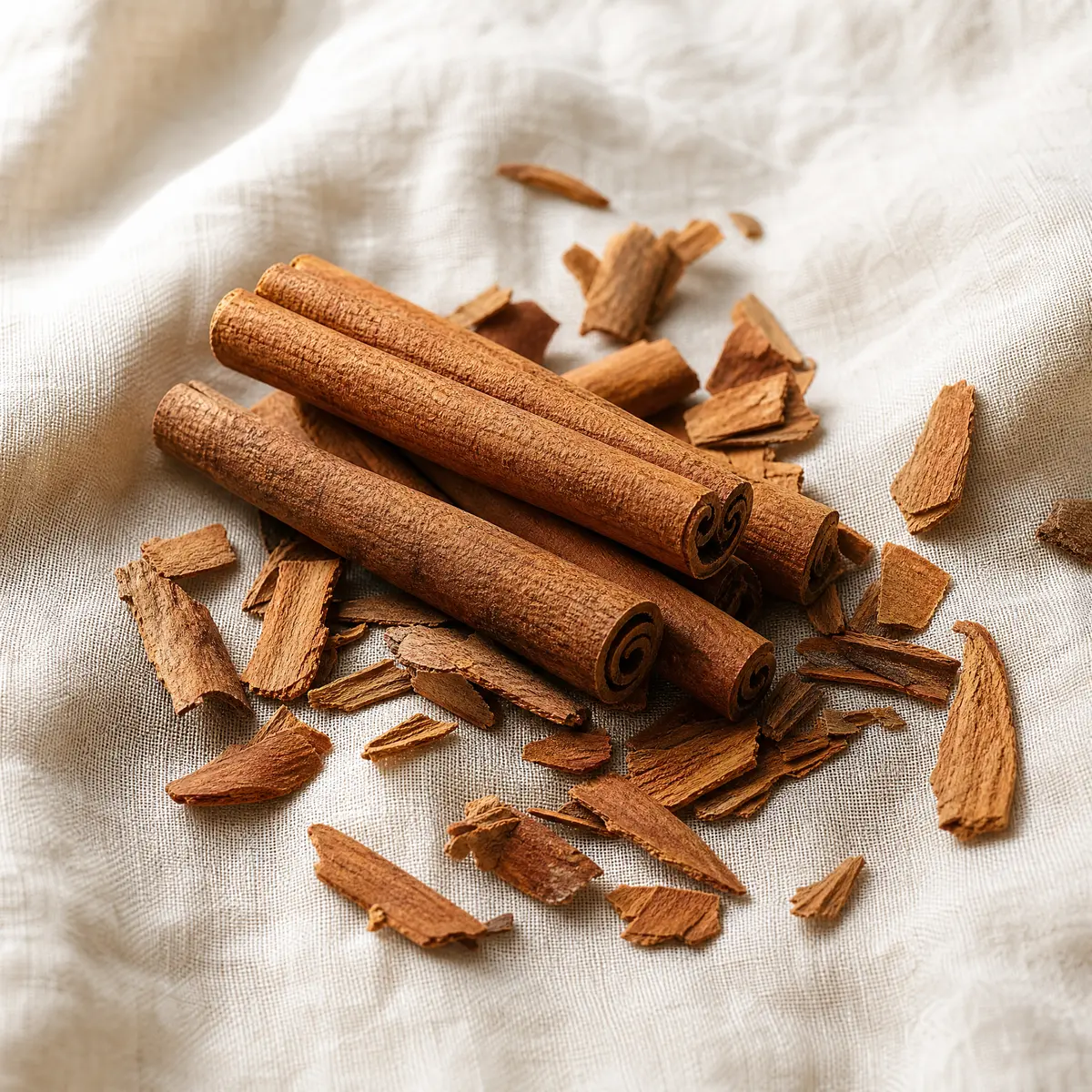
Cinnamon
Cinnamomum verum — 91.25 mg per serving
“Take the finest spices: of liquid myrrh 500 shekels, and of sweet-smelling cinnamon half as much.”
— Exodus 30:23
In Scripture: The Hebrew qinnāmôn appears only a handful of times in Scripture, and its most consequential appearance is a recipe. In Exodus 30:23 the Lord gives Moses exact measures for the holy anointing oil: 500 shekels of liquid myrrh, and half that weight — 250 shekels — of sweet-smelling cinnamon. The same spice perfumes the bed in Proverbs 7:17, grows among the spices of the garden in Song of Solomon 4:14, and is listed among the cargo of Babylon in Revelation 18:13.
In this formula: 91.25 mg per serving of Cinnamomum verum — true cinnamon of the ancient spice routes, rather than the cassia that is commonly sold under the same name today.
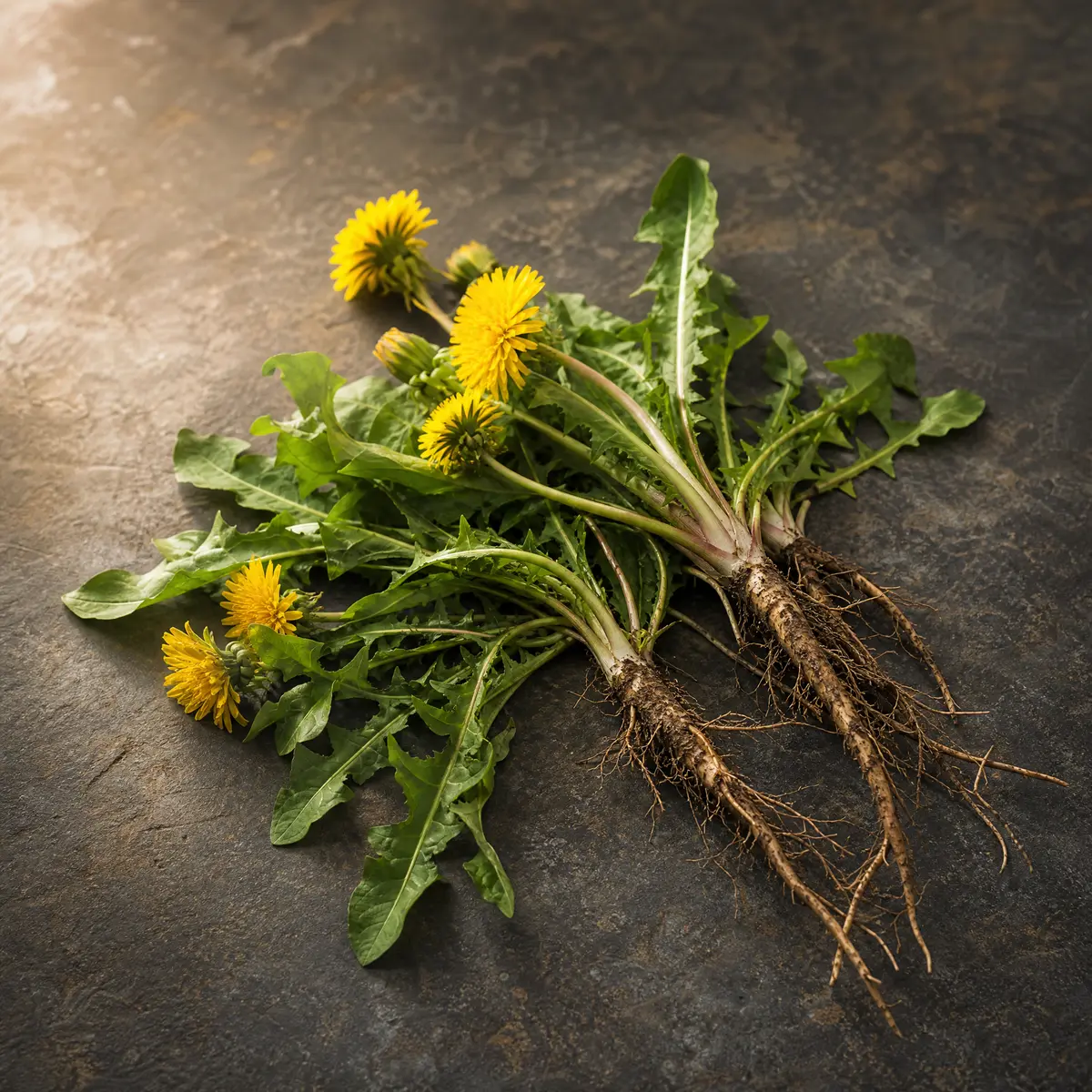
Dandelion (Bitter Herb)
Taraxacum officinale — 91.25 mg per serving
“They shall eat the flesh that night, roasted on the fire; with unleavened bread and bitter herbs they shall eat it.”
— Exodus 12:8
In Scripture: Exodus 12:8 commands that the Passover lamb be eaten with unleavened bread and mərōm — the bitter herbs. The instruction is repeated in Numbers 9:11, and the bitterness is the point: it carries the memory of Egypt into the meal itself. The bitter greens of the eastern Mediterranean are the plants that have carried that observance forward for three thousand years, and dandelion stands among them as one of the traditional bitter herbs of the Passover table.
In this formula: 91.25 mg per serving of Taraxacum officinale — the bitter herb of the Passover table, and the only one of the eight that Scripture places directly in a meal.
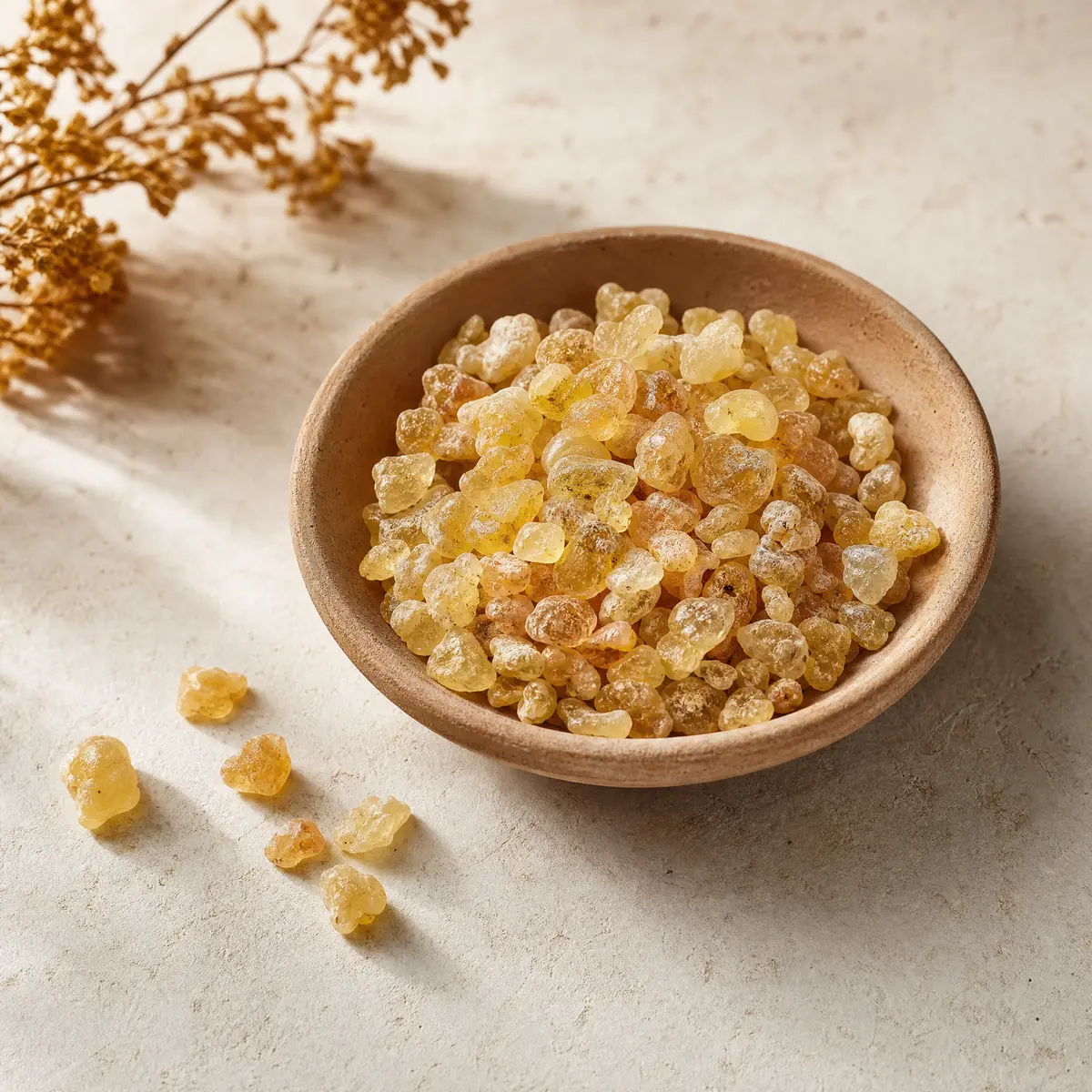
Frankincense
Boswellia serrata — 91.25 mg per serving
“Then, opening their treasures, they offered him gifts, gold and frankincense and myrrh.”
— Matthew 2:11
In Scripture: Ləḥōnāh in Hebrew, libanos in Greek, appearing more than twenty times. It is one of four spices in the holy incense of Exodus 30:34, burned upon the grain offering in Leviticus 2:1–2, carried out of Sheba with gold in Isaiah 60:6, and laid before the child at Bethlehem in Matthew 2:11.
In this formula: 91.25 mg per serving of Boswellia serrata — frankincense resin, tapped from the Boswellia tree as it has been since the caravans first carried it out of the east.
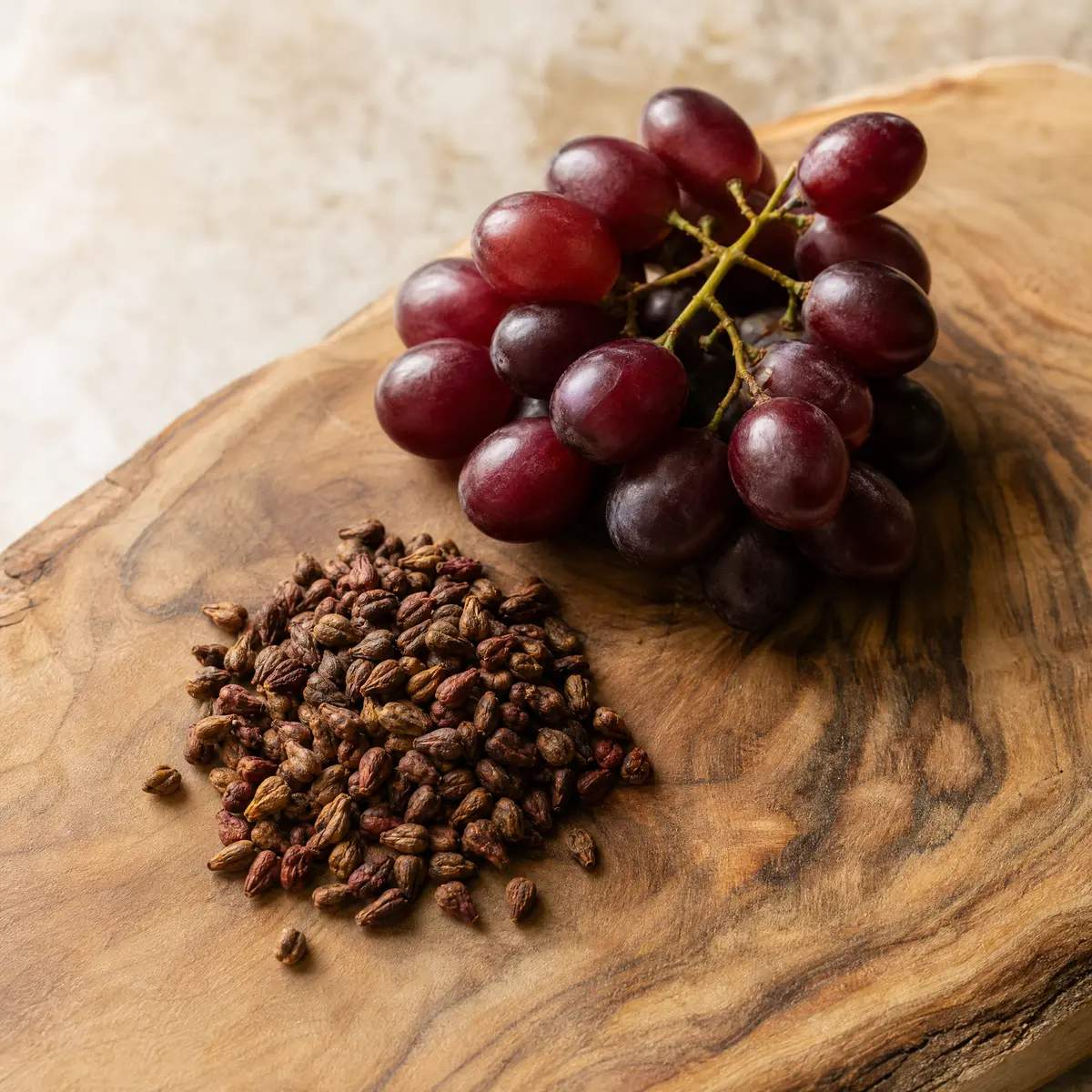
Grape Seed Extract
Vitis vinifera — 91.25 mg per serving
“My beloved had a vineyard on a very fertile hill. He dug it and cleared it of stones, and planted it with choice vines.”
— Isaiah 5:1
In Scripture: The vine is among the most heavily referenced plants in the Bible. Noah plants the first vineyard in Genesis 9:20. The spies carry a single cluster from the Valley of Eshcol on a pole between two men in Numbers 13:23. It stands among the seven species of the promised land in Deuteronomy 8:8, it is the subject of Isaiah’s Song of the Vineyard, and it is the image Christ takes for himself in John 15:1.
In this formula: 91.25 mg per serving of extract drawn from the seed of Vitis vinifera — the vine of Isaiah’s vineyard, of the cluster at Eshcol, and of the promised land itself.
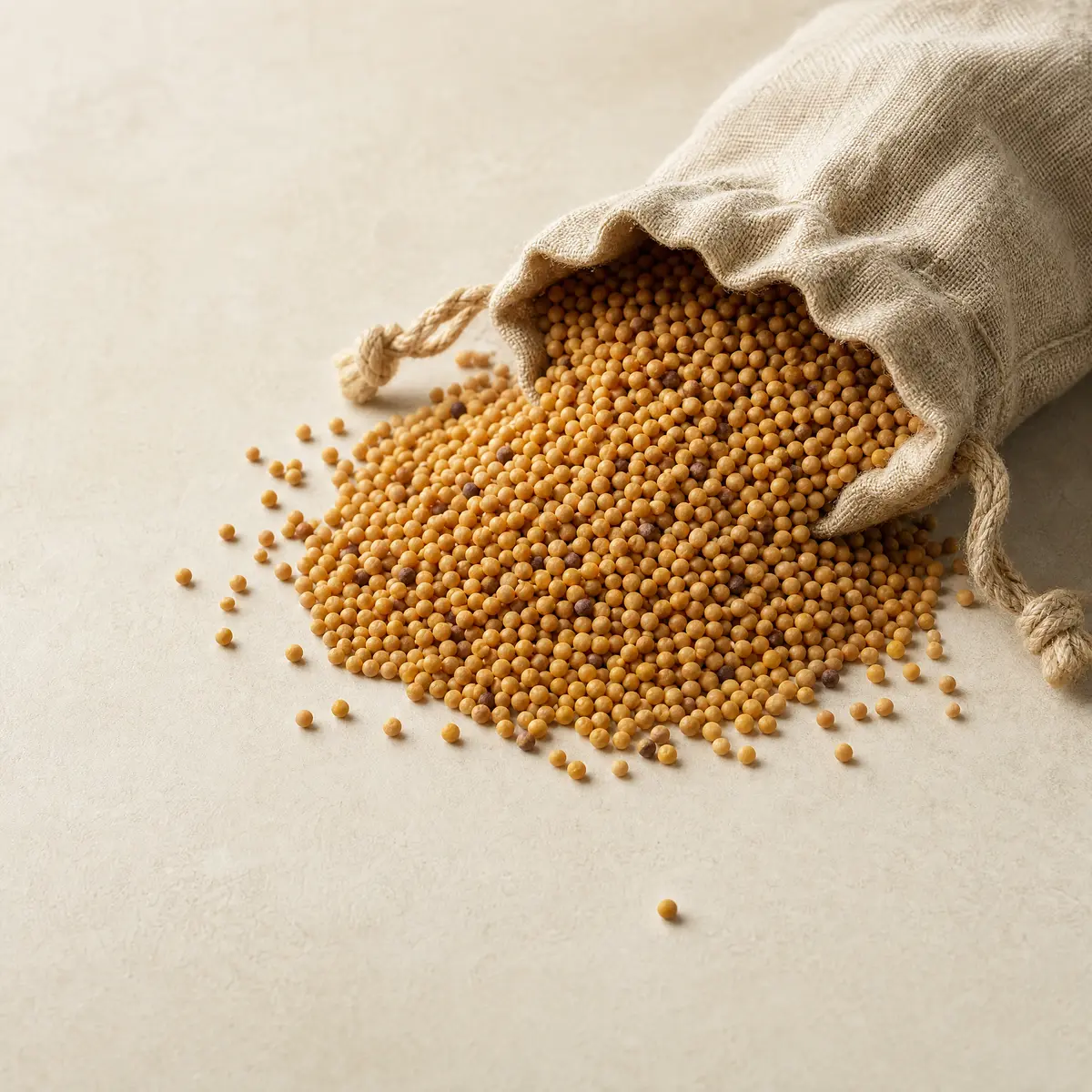
Mustard Seed
Sinapis alba / Brassica nigra — 91.25 mg per serving
“It is the smallest of all seeds, but when it has grown it is larger than all the garden plants.”
— Matthew 13:31–32
In Scripture: The Greek sinapi is used by Jesus twice over. In Matthew 13:31–32, Mark 4:30–32 and Luke 13:18–19 the kingdom of heaven is a mustard seed — smallest of seeds, largest of the garden plants. In Matthew 17:20 and Luke 17:6, faith the size of one moves a mountain and uproots a tree. No plant in Scripture carries more weight for its size.
In this formula: 91.25 mg per serving of mustard seed — Sinapis alba and Brassica nigra, the white and black mustards of the eastern Mediterranean.
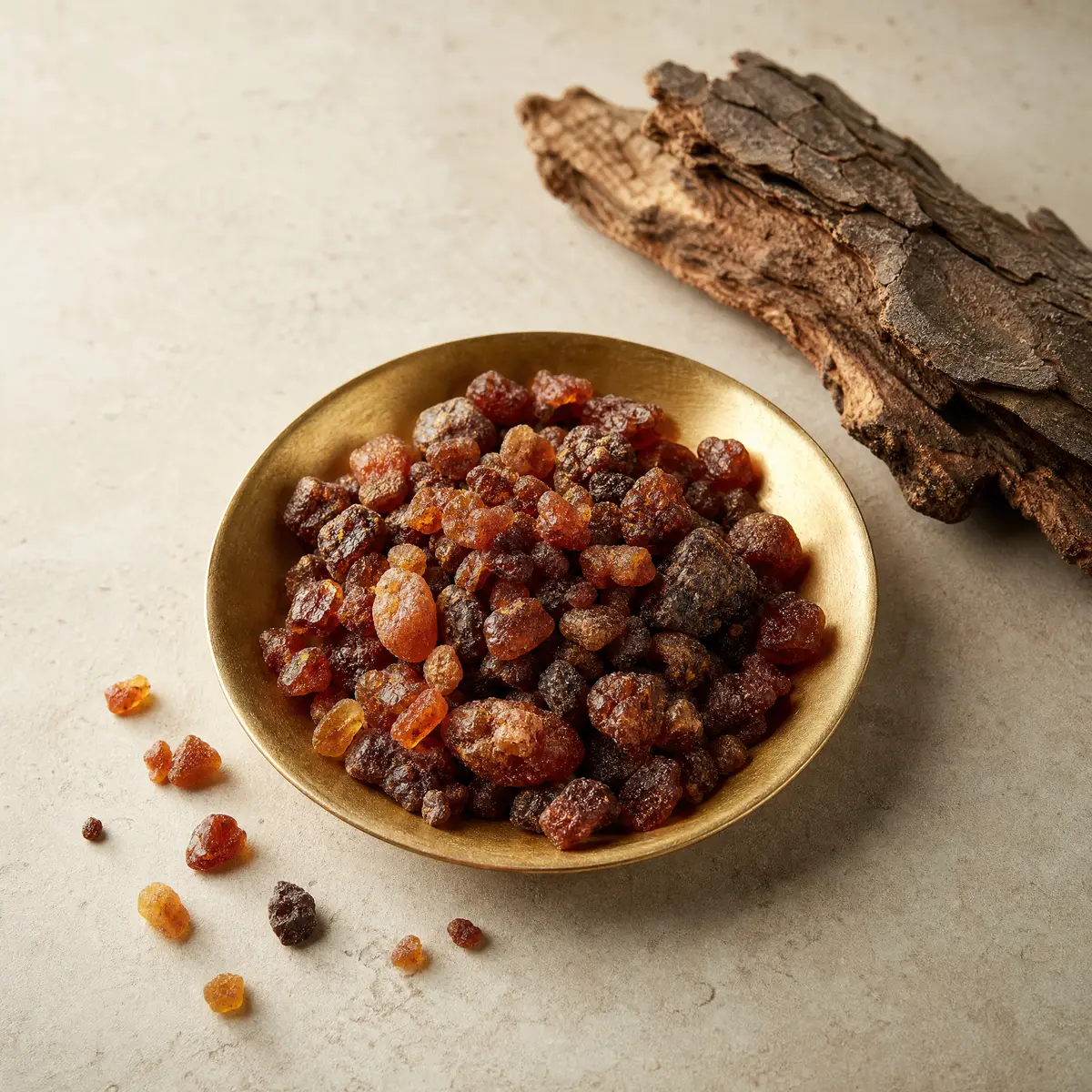
Myrrh
Commiphora myrrha — 91.25 mg per serving
“Nicodemus also, who earlier had come to Jesus by night, came bringing a mixture of myrrh and aloes.”
— John 19:39
In Scripture: Mōr is the chief spice of the anointing oil in Exodus 30:23 — 500 shekels of it, twice the weight of the cinnamon. It perfumes the king’s robes in Psalm 45:8, runs all through the Song of Solomon, and prepares Esther for her audience across six months of purification in Esther 2:12. It stands at both ends of Christ’s life: among the gifts at Bethlehem, mixed with wine and offered at the cross in Mark 15:23, and carried to the tomb by Nicodemus.
In this formula: 91.25 mg per serving of Commiphora myrrha resin — the same measure as every other botanical in the blend.
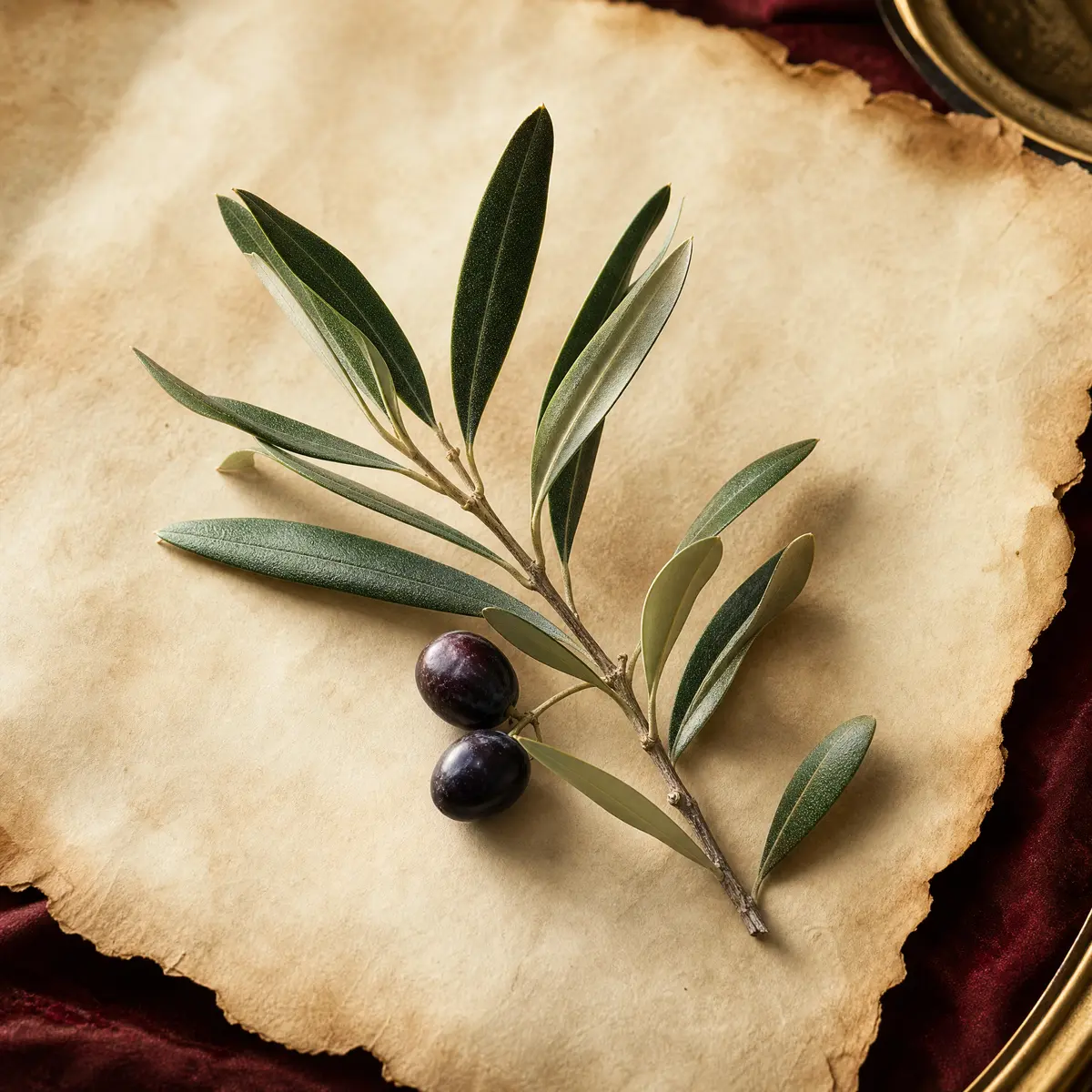
Olive Leaf
Olea europaea — 91.25 mg per serving
“And the dove came back to him in the evening, and behold, in her mouth was a freshly plucked olive leaf.”
— Genesis 8:11
In Scripture: The olive runs through the whole of Scripture: the beaten oil for the lamp in Exodus 27:20, one of the seven species of Deuteronomy 8:8, the two olive trees of Zechariah 4, the grafted branches of Romans 11:17. But Genesis 8:11 is the verse that matters for this particular ingredient. What the dove carries back to the ark is not a branch, not the fruit and not the oil — it is a freshly plucked olive leaf.
In this formula: 91.25 mg per serving of Olea europaea leaf: the part of the plant Genesis 8:11 names.
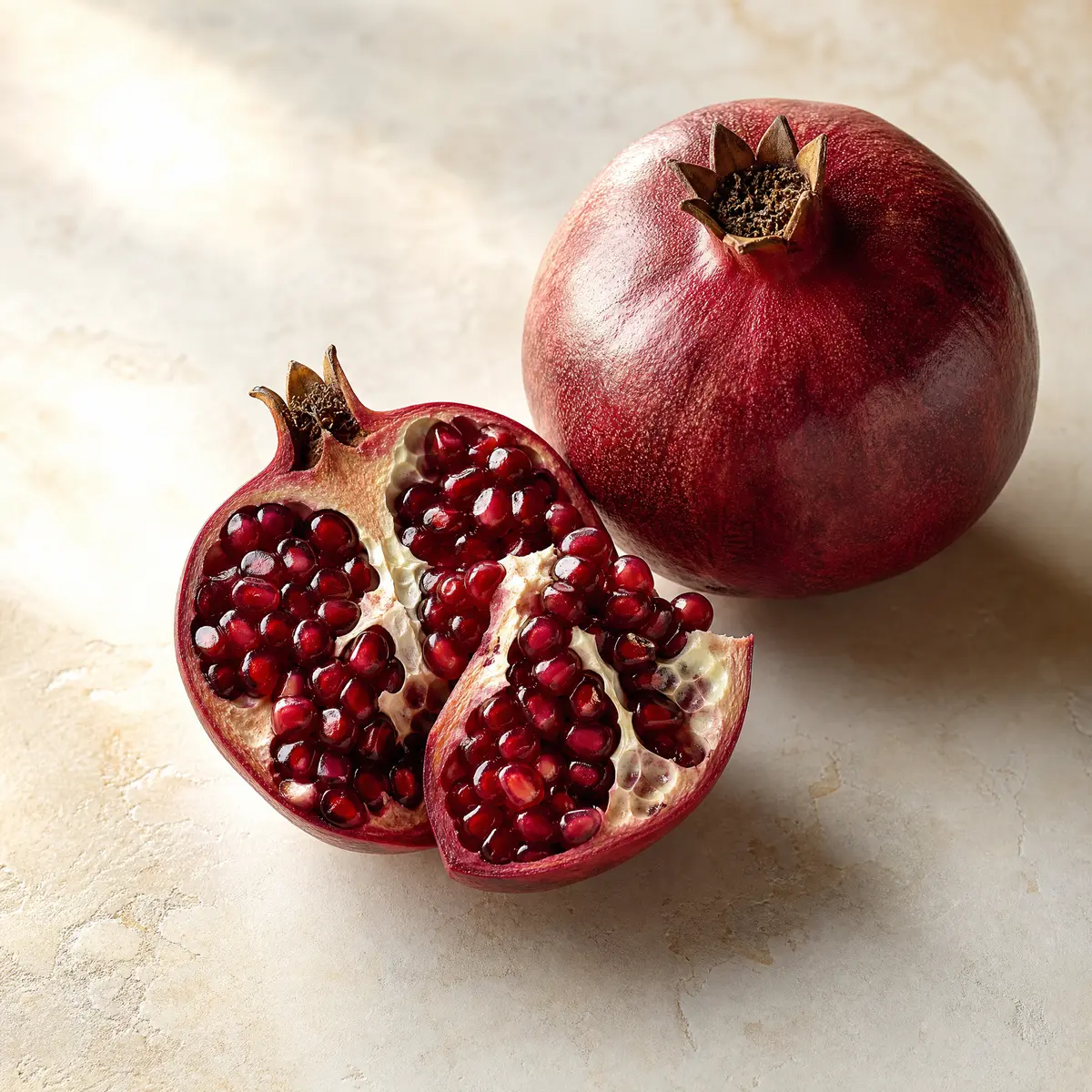
Pomegranate
Punica granatum — 91.25 mg per serving
“On its hem you shall make pomegranates of blue and purple and scarlet yarns, with bells of gold between them.”
— Exodus 28:33
In Scripture: Rimmôn alternates with bells of gold around the hem of the high priest’s robe in Exodus 28:33–34. Two hundred of them ring the capitals of the pillars Jachin and Boaz in Solomon’s temple, 1 Kings 7:18–20. The spies bring them back from Eshcol alongside the grape cluster in Numbers 13:23, and they stand among the seven species of Deuteronomy 8:8.
In this formula: 91.25 mg per serving of Punica granatum.
What Is Actually in the Bottle
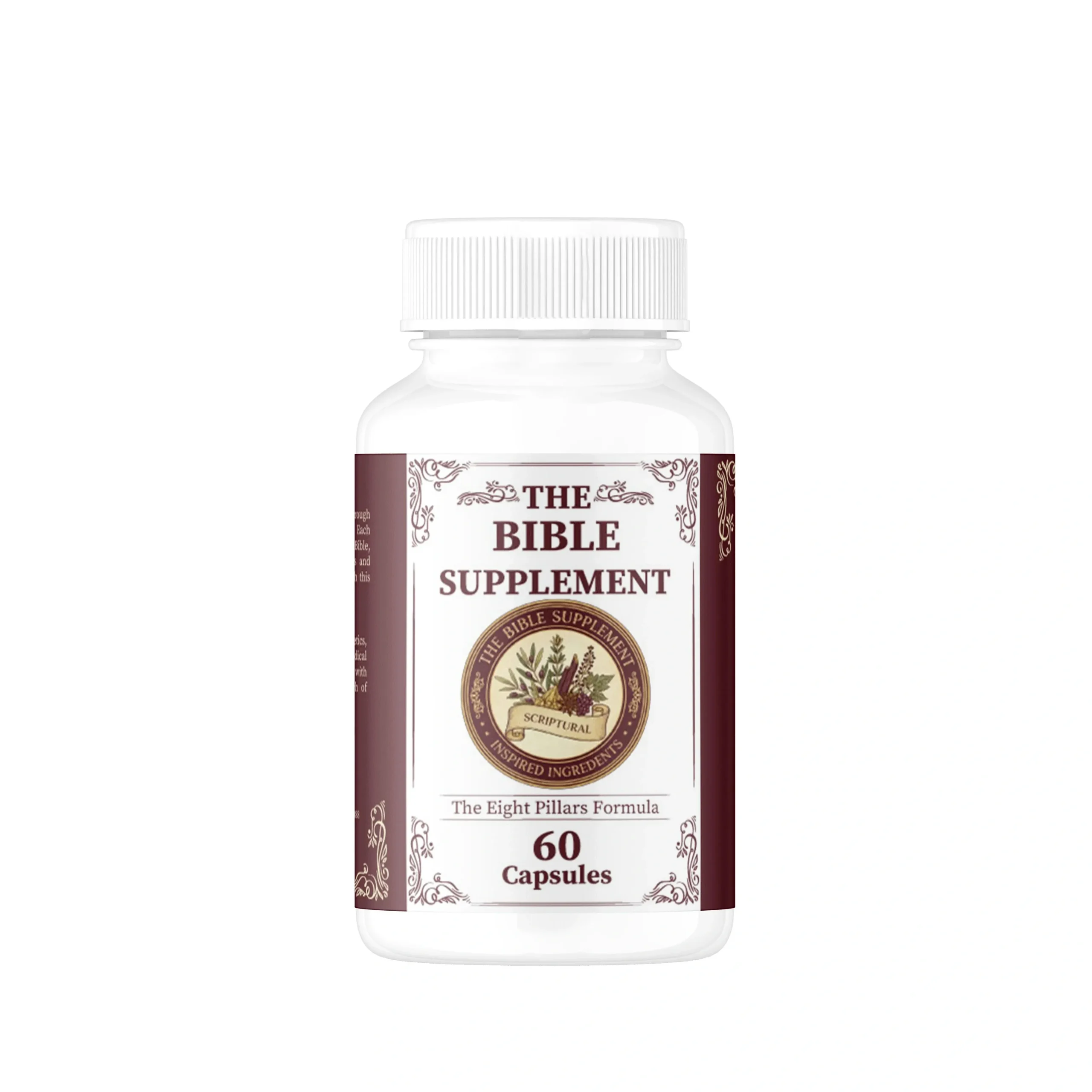
Eight botanicals at 91.25 mg each, for 730 mg of botanical ingredients per serving. Every amount is printed on the Supplement Facts panel. There is no proprietary blend on this label — no grouping of ingredients under a single total that hides how much of each you are getting.
That matters when you compare products. A label that lists eight impressive botanicals under one combined milligram figure can contain almost none of most of them. This one tells you the weight of each. If you are weighing this against another biblical formula, see our ingredient comparison with the Wisdom Bible Based Herbal Blend.
60 capsules per bottle | $39 one-time or $35/month Auto-Ship | $5.95 flat US shipping
Biblical Healing Herbs and Their Modern Uses
The Bible does not read like a book of medicine, yet it treats plants as part of ordinary care. A fig poultice is laid on Hezekiah’s boil in Isaiah 38:21. Oil and wine are poured on wounds in Luke 10:34, the most familiar picture of a medicinal oil in the New Testament. Jeremiah 8:22 asks, “Is there no balm in Gilead?”, and Ezekiel 47:12 describes trees whose leaves are for healing.
Many of these biblical plants are still used today, mainly as food, spice and fragrance. Their modern uses are a separate question from what the text describes, and the research on herbal remedies varies widely from plant to plant. This page describes where each botanical appears in Scripture and how much of it is in a serving. It does not claim that any herb heals or treats a condition.
Other Medicinal Plants of the Bible: Black Cumin, Cedar and Almonds
Several well-known plants of the Bible are not in this formula. They are worth knowing, because they appear often in lists of healing herbs:
- Black cumin (Nigella sativa), often called black seeds. Many scholars identify it with the Hebrew qetsach of Isaiah 28:25–27, threshed with a rod rather than a cart wheel.
- Cedar, whose aromatic wood is used with hyssop in the cleansing rite of Leviticus 14:4.
- Almonds, sent to Egypt as a gift in Genesis 43:11 and budding on Aaron’s staff in Numbers 17:8.
The eight in this formula were chosen because each can be traced to a specific passage and is practical to include at a disclosed, even amount. For a wider look at how to evaluate faith-based products, read our guide to Christian supplements.
Frequently Asked Questions About Biblical Herbs
What are the eight biblical herbs in The Bible Supplement?
The eight botanicals are cinnamon, dandelion (bitter herb), frankincense, grape seed extract, mustard seed, myrrh, olive leaf and pomegranate. Each one is named in Scripture, and each is listed on the Supplement Facts panel with its own amount per serving.
How much of each botanical is in a serving?
Each of the eight is included at 91.25 mg per serving, for a total of 730 mg of botanical ingredients per serving.
Which of the botanicals are among the seven species of the promised land?
Three of them. Deuteronomy 8:8 describes a land of wheat and barley, of vines and fig trees and pomegranates, a land of olive trees and honey. Grape, pomegranate and olive are all named in that verse.
Does the Bible talk about using herbs for healing?
Yes, in several places. Isaiah 38:21 describes a poultice of figs applied to King Hezekiah’s boil. In Luke 10:34 the Good Samaritan pours oil and wine on the wounds of the injured man. Ezekiel 47:12 and Revelation 22:2 speak of trees whose leaves are “for healing.” These passages show that biblical writers took ordinary plants seriously as part of care for the body.
What are the 9 holy herbs?
The “nine herbs” usually comes from the Old English Nine Herbs Charm, a tenth-century Anglo-Saxon text, not from the Bible. Scripture does not give a numbered list of holy herbs. The plants it treats as set apart are the spices of the anointing oil and incense in Exodus 30: myrrh, cinnamon, calamus, cassia, stacte, onycha, galbanum and frankincense.
What is the most important plant in the Bible?
There is no single answer, but the olive, the vine and the fig are the plants Scripture returns to most often. The olive gives the oil of anointing and the lamp, the vine is the image Jesus takes for Himself in John 15:1, and the fig tree is a recurring picture of peace and plenty in Micah 4:4.
Does the Bible say anything about turmeric?
Turmeric is not named in the Bible. The Hebrew karkom in Song of Solomon 4:14 is usually translated saffron. Turmeric is not among the eight botanicals in this formula.
These statements have not been evaluated by the Food and Drug Administration. This product is not intended to diagnose, treat, cure, or prevent any disease. Consult your healthcare provider before starting any supplement, especially if you are pregnant, nursing, taking medications, or have a medical condition.
Eight Botanicals, Documented
Scripture-referenced botanicals in a clearly labeled formula. Read the ingredient list, check the amounts per serving, and decide for yourself whether it belongs in your routine.
Order The Bible Supplement Ministry Partner ProgramNext steps
- Order The Bible Supplement — pricing, what is in each bottle, and shipping.
- Christian supplements: a faith-based guide — how to think about scripture-referenced botanicals, and what to ask before buying any supplement.
- Shipping and returns — the flat U.S. rate and the 30-day policy on unopened bottles.
- Ministry Partner Program — for churches, schools and nonprofits offering the product to their own community.